
The US Senate passed the Foreign Robocall Elimination Act, S.2666, on 3 August 2026 by unanimous consent. It goes after the foreign gateways that pump illegal robocalls into US networks, not the businesses running honest campaigns. Even so, it pushes the compliance bar higher for every voice provider and auto dialer operator, so it is worth understanding now.
What S.2666 actually does
The bill still has to clear the House and get the President’s signature before it becomes law, so nothing here is in force yet. But the shape of it is clear, and it shows where enforcement is heading.
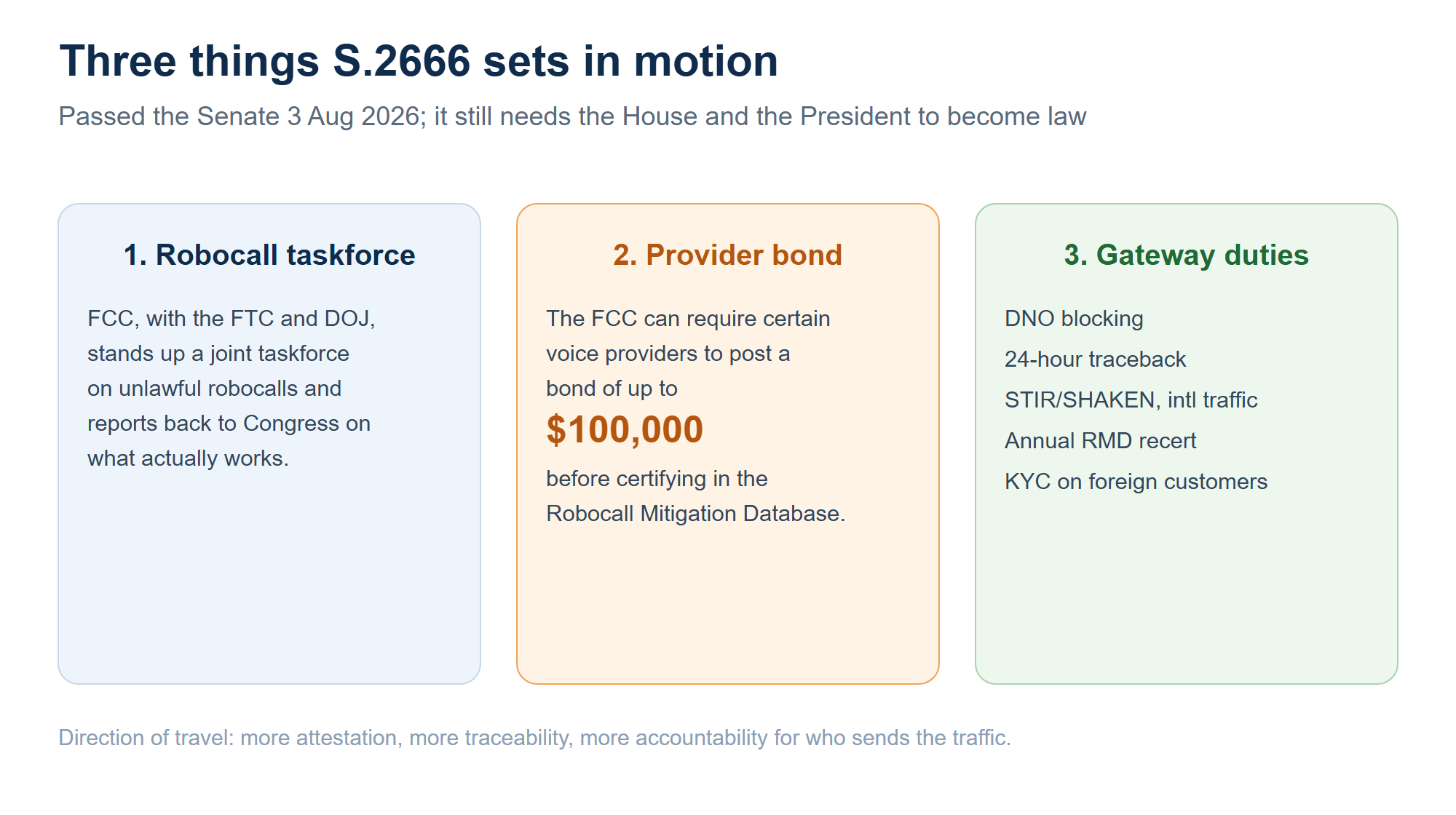
There are three moving parts:
- A joint taskforce. The FCC, the FTC and the DOJ would run a shared taskforce on unlawful robocalls and report to Congress on what actually stops them.
- A bond for risky providers. The FCC could require certain voice providers to post a bond of up to $100,000 before they certify in the Robocall Mitigation Database that they are doing the work.
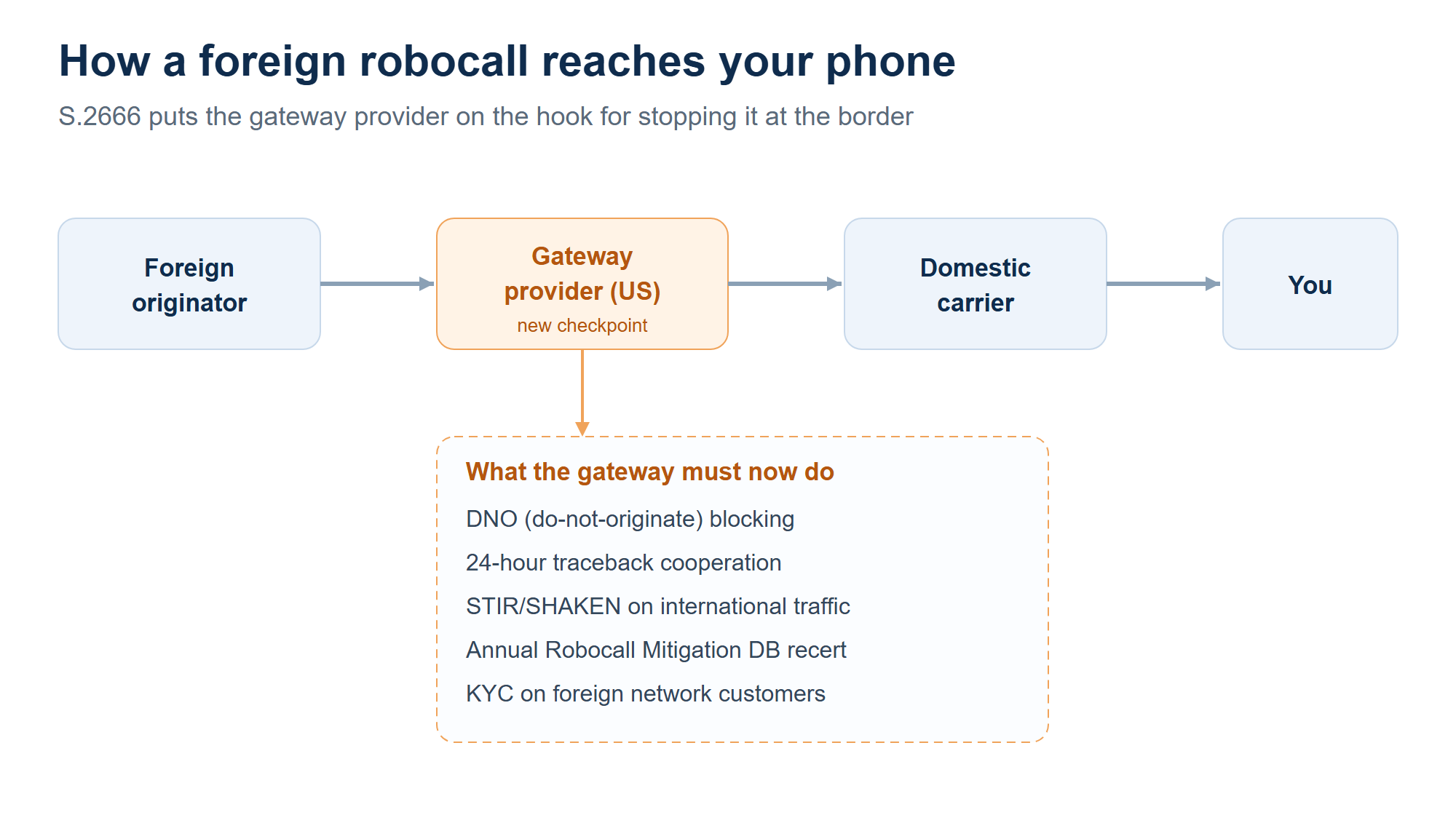
- Real duties for gateway providers. The providers that hand foreign traffic to US carriers get a concrete list: do-not-originate blocking, 24-hour traceback cooperation, STIR/SHAKEN on international traffic, annual recertification, and know-your-customer checks on the foreign networks they carry.
Why gateways, and not you
A gateway provider is the on-ramp. It takes calls from a foreign network and hands them to a domestic carrier for delivery. That is where most illegal robocall volume slips in, so that is where the bill puts the checkpoint.
If you run legitimate campaigns from inside the US on registered numbers, you are not the target. The catch is that the same tools the bill leans on, STIR/SHAKEN attestation, traceback, and the Robocall Mitigation Database, are the tools your calls are already judged by. As the bar rises for the bad actors, the call-signing and paperwork expectations rise for everyone.
What it means for a legitimate auto dialer
None of this changes how good auto dialer software works, but it rewards operators who keep their house in order:
- Sign your calls. Make sure your provider gives your traffic full STIR/SHAKEN attestation, not a partial one. Full attestation is what keeps you out of the “spam likely” bucket.
- Keep your RMD entry honest. If your provider certifies mitigation, that certification has to match reality. A bond requirement pushes that discipline down to you.
- Cooperate with traceback fast. A 24-hour window for gateways means the whole chain gets asked to respond quickly. Know who to call at your carrier.
- Vet your routes. Cheap grey-market termination is exactly what this bill is squeezing. If a route looks too cheap, it probably carries risk you do not want on your caller ID. Our note on carrier KYC vetting covers what to ask.
What to do now
- Confirm your outbound numbers are registered and getting full attestation.
- Ask your provider whether they expect a bond, and how it reaches you.
- Keep consent and DNC records clean and exportable. Our 2026 TCPA rundown has the consent details.
- Review your termination routes for anything foreign or unusually cheap.
Frequently asked questions
Is the Foreign Robocall Elimination Act law yet?
No. The Senate passed it on 3 August 2026, but it still needs the House and the President’s signature.
Does S.2666 ban auto dialers?
No. It targets the foreign gateways that carry illegal robocalls, plus reporting and certification duties. Legitimate dialing is not banned.
What is a gateway provider?
A voice provider that receives calls from a foreign network and hands them to a US carrier for delivery.
Will this raise my costs?
Possibly, and indirectly. If your provider has to post a bond or tighten KYC, some of that discipline reaches you. Clean operators feel it least.
What is the single best thing I can do today?
Make sure your calls carry full STIR/SHAKEN attestation and your consent records are clean and current.
The direction is steady: more attestation, more traceability, and more accountability for who puts traffic on the network. If your campaigns already run on registered numbers with clean consent, S.2666 is a tailwind, not a threat. See how ICTDialer keeps compliant dialing straightforward.